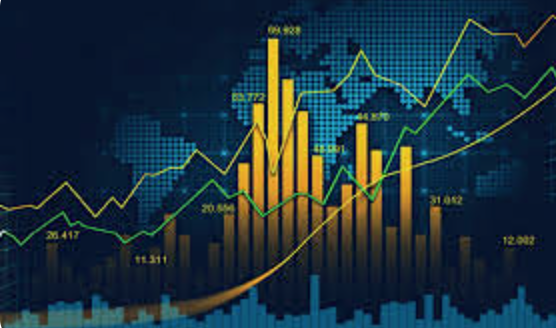
Trading
Overview
Trading has always been the heartbeat of the global economy — the continuous exchange of value that connects nations, industries, and people. After five decades witnessing markets evolve through multiple eras — from manual exchange floors to algorithmic platforms — one truth remains unchanged: trading is a reflection of trust, speed, and information. What has changed, profoundly, is the medium. The trader’s intuition is now augmented by data; market access, once limited to institutions, is now democratized through technology.
Today, global trading is no longer defined only by price and volume, but by data, transparency, and sustainability. Technology has turned markets into ecosystems — where finance, commodities, and carbon credits are traded with digital precision. The world’s wealth, once moved by paper contracts, now flows through code.
Industry Dynamics
Modern trading operates at the intersection of finance, technology, and geopolitics. Digitization has erased borders — transactions occur in milliseconds across continents. Algorithmic trading and AI-driven analytics dominate both institutional and retail markets, reducing human error while amplifying the speed of decision-making. Data feeds, risk models, and blockchain ledgers form the nervous system of today’s exchanges.
However, the true transformation lies beyond technology: it is purpose-driven trading. As sustainability becomes a global imperative, markets are adapting to measure not only profit, but impact. Carbon trading, renewable energy certificates, and ESG-linked commodities are now integral parts of the financial landscape. These instruments align capital flows with climate goals — signaling that the markets of the future will not reward extraction alone, but regeneration.
Additionally, commodities and logistics are becoming more transparent. Blockchain and digital documentation reduce fraud and inefficiency in global shipping, ensuring that products are traceable from source to consumer. As a result, trust — the oldest currency in trade — is being rebuilt through technology.
Core Challenges
Trading remains a field where precision and discipline are everything. Market volatility, intensified by global political and economic events, continues to test risk management systems. While digitalization enhances efficiency, it also introduces systemic vulnerabilities — cyber threats, flash crashes, and the danger of overreliance on automated systems.
Another major challenge is regulatory fragmentation. Global trading spans multiple jurisdictions, each with unique compliance standards. Coordinating these rules — particularly for new instruments like digital assets and carbon credits — demands international alignment.
Finally, human expertise remains irreplaceable. Algorithms process data, but they cannot interpret context or ethics. The future trader must master both — technology for precision, and judgment for integrity.
Strategic Outlook
The next evolution of trading will be defined by integration, transparency, and sustainability.
AI-assisted decision-making: Algorithms will predict patterns, but human insight will define strategy.
Blockchain infrastructure: Distributed ledgers will anchor secure, traceable, and auditable trades.
Sustainability-linked instruments: Markets will increasingly trade environmental assets — carbon, biodiversity credits, renewable energy futures.
Decentralized participation: Emerging technologies will allow smaller institutions and individuals to access global markets on equal footing.
Trading will become less about speculation and more about strategic stewardship of global resources and capital.
Takeaway
Trading has always been an art of balance — between risk and reward, instinct and analysis, speed and patience. In the digital era, that balance extends to profit and purpose.
The most successful market players of tomorrow will not be those who move fastest, but those who understand the true flow of value — from capital to climate, from data to trust, from trade to transformation.
In essence, the new age of trading is not only about making markets smarter, but about making them meaningful.