Industrial
Overview
Industry has always been the pulse of economic progress — the measure of a nation’s capacity to build, innovate, and endure. Over fifty years of observing global development, I have seen the industrial landscape evolve through extraordinary transformation: from mechanical efficiency to digital intelligence, from local production to global integration, and now toward resilience and sustainability.
Today, the industrial sector stands at a turning point. The world no longer demands only volume — it demands value, adaptability, and responsibility. Modern industry must not just produce efficiently, but think strategically about the systems that sustain production itself.
Industry Dynamics
The global industrial ecosystem has shifted from linear to interconnected. Supply chains now function as digital networks rather than physical routes. Automation, robotics, and data analytics are redefining how factories operate — increasing precision, reducing waste, and ensuring agility in real time.
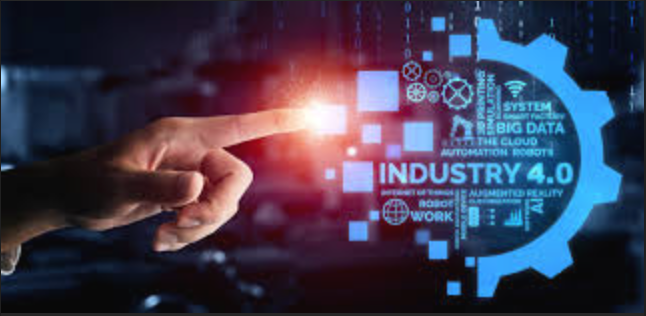
Smart factories equipped with IoT sensors and AI-driven control systems are able to self-correct, predict equipment failures, and optimize energy usage. This integration of cyber-physical systems — often described as Industry 4.0 — has turned manufacturing and industrial operations into intelligent organisms capable of learning and adapting.
Meanwhile, the traditional boundaries between sectors are disappearing. Energy, technology, and industrial design now merge into cross-disciplinary ecosystems. Companies are building circular supply chains, where waste becomes raw material for new production. Industrial innovation is no longer just about what we make — but how and why we make it.
Core Challenges
The modern industrial economy faces its greatest test: balancing efficiency with resilience. The global disruptions of recent years exposed how fragile extended supply chains can be. A delay in one region can halt production worldwide. As a result, companies are shifting from “just-in-time” to “just-in-case” models — creating redundancy, regional hubs, and digital visibility across every node of the supply chain.
Energy dependency is another challenge. The shift to low-carbon operations is essential, but many industries remain tied to fossil fuels for reliability and scale. Transitioning to renewable energy requires strategic investment and innovation in storage and distribution.
Additionally, talent transformation remains critical. The future industrial workforce must master both machinery and data — combining the intuition of engineering with the intelligence of analytics. Training and retention are as vital as technology itself.
Strategic Outlook
The new era of industry will be defined by sustainability, intelligence, and sovereignty.
Localized production: reshoring and regional manufacturing will reduce risk and carbon footprint.
Digital visibility: end-to-end data systems will ensure transparency and control across global networks.
Green operations: renewable energy, electrification, and waste-to-resource models will become standard.
Collaborative ecosystems: partnerships between technology providers, governments, and manufacturers will drive innovation at scale.
Industrial companies must think like systems engineers — optimizing not just machines, but the entire flow of value and impact.
Takeaway
Industry is no longer defined by the noise of machines but by the intelligence of systems. The next industrial leaders will not simply produce more — they will produce better, integrating technology, ethics, and resilience into every process.
The factories of tomorrow will stand as ecosystems of efficiency and purpose, proving that progress is not measured by output alone, but by how responsibly we power the world.
In the new industrial age, resilience is the ultimate resource, and sustainability is the blueprint for endurance.