
Space Economy
Overview
For centuries, humanity looked to the stars with wonder. Today, it looks with purpose. The space economy — once the domain of national exploration — has become one of the most dynamic, high-potential frontiers for global business and innovation.
Having witnessed multiple waves of industrial revolutions on Earth, I believe space represents the next — one that will extend human capability beyond our planet while redefining industries back home.
Industry Dynamics
The new space economy is no longer about exploration alone; it is about commercialization and collaboration. Private companies now launch satellites, build spacecraft, and even plan lunar infrastructure. Reusable rockets have cut launch costs by over 90%, transforming access to orbit into a scalable business.
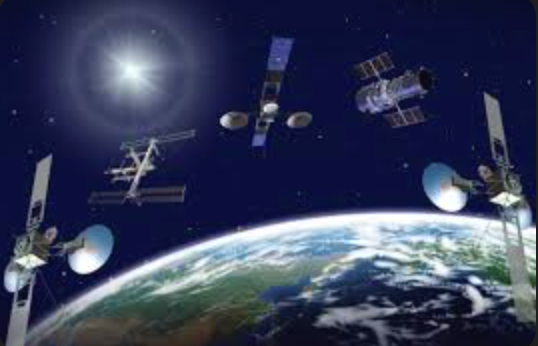
Satellite constellations power global communications, remote sensing, and climate monitoring. Space-based data supports agriculture, logistics, and national security. Meanwhile, microgravity research enables breakthroughs in pharmaceuticals, materials science, and advanced manufacturing.
The vision extends even further — from asteroid mining for rare metals to solar power harvesting in orbit and space tourism. Collectively, these activities could generate trillions in new value over the next few decades, creating an interconnected ecosystem of industries that transcend borders and even planets.
Core Challenges
The rapid commercialization of space brings unprecedented challenges. Regulation and governance lag behind innovation — space traffic management, orbital debris, and property rights in outer space remain unresolved. Without global coordination, overcrowding and collision risks threaten sustainability.
Capital intensity is another barrier. Developing space infrastructure requires massive investment, often beyond the reach of individual firms. International cooperation between public and private sectors will be essential to distribute costs and ensure equitable access.
Finally, ethical and environmental responsibility must guide expansion. The mistakes made on Earth — exploitation without stewardship — cannot be repeated beyond it.
Strategic Outlook
The next phase of the space economy will be defined by:
Satellite-driven intelligence: real-time data shaping climate, defense, and logistics systems.
Public-private partnerships: governments funding innovation while private firms deliver execution.
Orbital infrastructure: manufacturing, refueling, and data centers in space.
Sustainable exploration: closed-loop life support, recyclable materials, and ethical frameworks for interplanetary activity.
Takeaway
The space economy is no longer science fiction; it is a new chapter of human enterprise. It merges vision with viability — proving that exploration can coexist with profitability.
In the decades ahead, space will become the ultimate test of innovation, cooperation, and conscience.
The question is not whether humanity will build beyond Earth, but how wisely it will do so. The future belongs to those who see space not as escape, but as expansion — responsibly engineered for generations to come.
