Healthcare & Enablement

Overview
Healthcare has always been the most human of all industries — built on care, trust, and compassion. Yet over the past fifty years, I have seen it evolve into one of the most technologically advanced systems on Earth. What defines healthcare today is not only its scientific sophistication, but its renewed focus on enablement: empowering people to live healthier, longer, and more informed lives.
From hospitals to home care, from digital diagnostics to wearable devices, the sector is entering an age where medicine is no longer confined to treatment — it is becoming a continuum of prevention, prediction, and participation.
Industry Dynamics
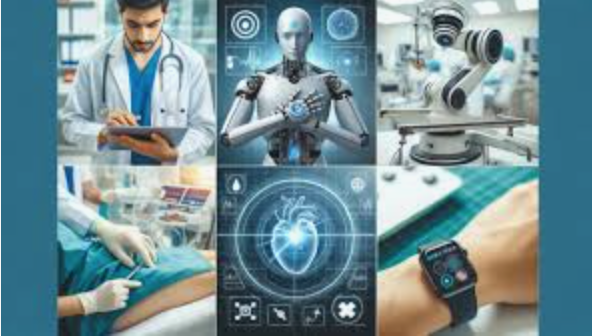
The modern healthcare ecosystem is shaped by the convergence of medicine, technology, and data. Digital health platforms now connect patients and providers across distance and time, enabling remote consultations and continuous monitoring. Artificial Intelligence (AI) supports doctors in diagnostics, analyzing images, predicting disease progression, and suggesting personalized treatment plans.
Meanwhile, wearable devices and mobile health apps have given individuals real-time access to their own health metrics — transforming patients into active participants rather than passive recipients of care. This trend toward self-empowerment is redefining the patient–provider relationship into a partnership built on transparency and shared decision-making.
Precision medicine is another major milestone. By integrating genetic data, lifestyle factors, and environmental insights, healthcare systems can now deliver treatments designed for the individual, not the average. Combined with robotics-assisted surgeries, telemedicine, and smart hospital systems, these innovations are raising both the quality and accessibility of care worldwide.
Core Challenges
However, healthcare’s transformation also reveals deep systemic challenges. Affordability and access remain critical — advanced technologies and specialized treatments often serve the few, not the many. Achieving universal healthcare requires equitable financing models and public–private collaboration to make innovation inclusive.
Data privacy is another concern. As digital health records and connected devices collect massive amounts of personal data, protecting patient confidentiality is not just a regulatory requirement — it is an ethical obligation. Cybersecurity threats can undermine trust in systems designed to save lives.
The sector also faces a workforce crisis: an aging population and increasing demand are outpacing the supply of trained medical professionals. Technology can ease workloads through automation and virtual assistance, but it cannot replace human empathy and expertise. The future of healthcare must therefore balance efficiency with humanity.
Strategic Outlook
The healthcare of tomorrow will be personalized, preventive, and participatory.
Integrated care ecosystems will link hospitals, clinics, and home-based care through unified data systems.
AI and robotics will augment medical staff, improving accuracy and reducing fatigue.
Preventive healthcare will become mainstream — focusing on lifestyle, nutrition, and mental well-being rather than crisis response.
Global collaboration will accelerate research and pandemic preparedness through shared data and open science.
The goal is not only to treat disease but to create systems that enable wellness, resilience, and dignity throughout life.
Takeaway
Healthcare is entering its most human era — paradoxically driven by machines, yet defined by compassion. The next generation of medical innovation will not be about hospitals or hardware, but about connection and continuity.
The leaders who shape this future will be those who see beyond technology — those who understand that healing begins not in algorithms or devices, but in empathy, equity, and the enduring promise to protect life itself.